Act reliably
Our Annual Report
Act reliably
Our Annual Report
Press Release
Corporate news

Compared with our building portfolio, our own operations have a considerably lower impact on the environment and climate, accounting for less than 3% of our Scope 1 and Scope 2 emissions. Nevertheless, we are continuously improving resource efficiency and reducing emissions across our operations, particularly in our vehicle fleet, work equipment, and office and administrative buildings.
In our own operations, we pursue a structured approach to improving energy efficiency. Our ISO 50001-certified energy management system enables the systematic recording, analysis, and management of energy consumption and supports the continuous reduction of emissions.
The energy management system covers our central administrative locations in Germany and Austria. While the German sites are covered by an ISO 50001-certified Energy Management System (EMS), energy-related processes at the Austrian locations are managed within the framework of an ISO 9001-certified quality management system. The objective of energy management is to systematically monitor and analyze energy consumption in offices, workshops, operational facilities, and our vehicle fleet. Based on these insights, measures can be developed and implemented to continuously reduce the consumption of electricity, heating energy, and fuels.
The effectiveness of the system is regularly reviewed by independent external auditors. Certification is not regarded as an end in itself but rather as the foundation for a continuous improvement process. Vonovia continuously evaluates consumption data, assesses additional measures, and further develops its energy management system. In addition, the system undergoes external recertification every three years.
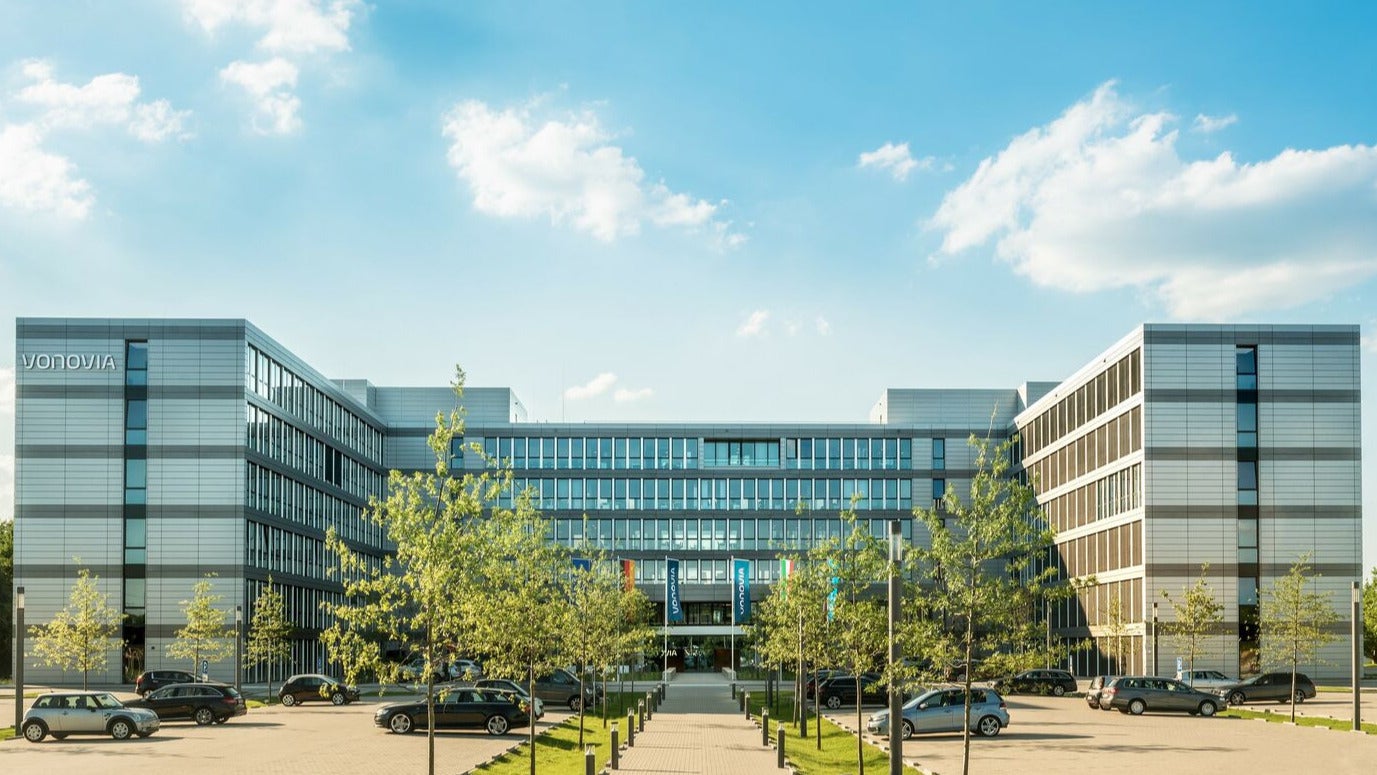
Our corporate headquarters in Bochum has been awarded DGNB Gold certification, the central administrative building of BUWOG in Vienna holds ÖGNI Gold certification, and the leased office space at our Malmö location is situated in a building with LEED Gold certification.
We also aim to operate our office and administrative buildings as resource-efficiently as possible. As early as 2022, we began transitioning administrative buildings from our own portfolio to renewable electricity, implemented through Vonovia Energie Service GmbH (VESG), the Group’s internal energy generation and supply company. In addition, we procure renewable electricity through two Power Purchase Agreements (PPAs) with RWE Supply & Trading, covering electricity generated by 15 wind turbines. In Austria, all BUWOG office locations have been supplied with certified renewable electricity (UZ46) since 2021. Electricity consumption in Sweden is fully covered by guarantees of origin from nuclear energy.
We are also continuing to improve our energy efficiency. Prior to the introduction of our ISO 50001-certified Energy Management System (EMS), we regularly conducted energy audits in accordance with DIN EN 16247-1, as required by law. These audits included sample inspections and assessments of the energy-related aspects of buildings used for our own business operations. Due to Vonovia’s largely homogeneous building and consumption structure, the identified areas for improvement could be effectively transferred across the Group. The recommendations developed by energy consultants were incorporated into action packages for the respective organizational units and implemented locally. These included energy- and resource-saving measures such as the use of LED lighting, motion sensors for lighting systems, and the installation of air-source heat pumps as an energy-efficient heating solution.
Today, the continuous identification and implementation of efficiency measures are carried out within the framework of our ISO 50001-certified Energy Management System. For example, our IT department has implemented an automatic screen shutdown after 15 minutes of inactivity, thereby putting into practice a recommendation from previous energy audits. In addition, we are increasingly promoting paperless office practices.
Our vehicle fleet accounts for approximately three quarters of the emissions generated by our business operations. Most of our roughly 6,300 vehicles are light commercial vehicles used by our technicians and employees of the residential environment service in Germany. We are continuously transitioning our fleet to vehicles with lower emissions and, wherever possible, implementing innovative transport solutions based on low-emission small vehicles. One measure that has been in place for some time is the speed limitation of our commercial vehicles, which helps reduce emissions.
We continue to advance the electrification of our vehicle fleet and are increasingly promoting the use of (e-)bicycles. In this context, we decided to install more than 100 charging stations for electric vehicles at our corporate headquarters. In addition, electric vehicles have been incorporated into our company car policy.
In Austria, 100% of our vehicle fleet has already been electrified. In Sweden, around 40% of our vehicles are powered by either fully electric or hybrid drivetrains.
Average fuel consumption is approximately 8.1 liters per 100 kilometers. Average emissions in 2025 decreased slightly by around 1% compared with the previous year.
In our residential environment services, we are also working to reduce the use of fossil fuels. To achieve this, we are replacing petrol-powered gardening equipment with battery-operated alternatives. Around 1,500 battery-powered devices are already in use. These new devices significantly reduce both emissions and noise pollution, providing clear benefits for our tenants as well as for the health and well-being of our employees. We intend to continue this transition, extend it to additional types of equipment, and test mobile charging solutions.